SANCB gives sight to North West people


Image

By Obakeng Maje

Mahikeng-SA National Council for the Blind’s Bureau on a mission of giving back the gift of sight to the North West communities.

The Bureau for the Prevention of Blindness, SA National Council for the Blind’s Eye Care Services Division has just celebrated 60 years of mobile outreach service to South Africa. 

“To mark this, Council and our Bureau are launching a dedicated eye care facility in the North West” National Executive Director Jace Nair said. 

Nair said due to the need for eye care services in this province, a special Parkhome is earmarked to become a permanent eye care facility in the North-West Province at Mafikeng Provincial Hospital. “This is where pre and post-operative care will be provided” said Nair.

The facility will be opened by the SA National Council for the Blind in association with the North West Provincial Department of Health and funded by the Allergan Foundation. 

“The launch will be held by North West Provincial Department of Health and the SA National Council for the Blind at the Mafikeng Provincial Hospital Complex” Department of Health spokesperson Tebogo Lekgethwane said.

The department said 80% of blindness is avoidable either through prevention or through treatment. 

“We hope that this dedicated facility helps to meet the challenges of urgent eye care treatment for those in need” said Lekgethwane. 


Date    : 13 June 2013

Venue : Bophelong Mafikeng Provincial Hospital Complex, Recreational Hall.


Time   : 11:00 


Follow us on Twitter@Taung_DailyNews

Zuma reassures SA on Madiba


Image

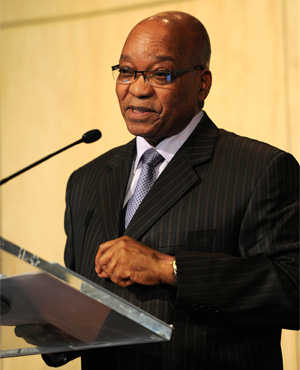
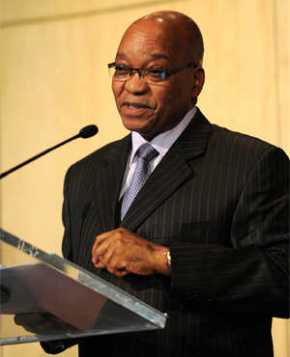
Johannesburg – President Jacob Zuma has sought to reassure an uneasy nation that Nelson Mandela, although in a “very serious” condition as he battles a recurrent lung infection, is receiving the best of care.


Zuma got a briefing on Tuesday from doctors on the condition of the frail former president, who has showed no sign of improvement after four days in hospital.


In a terse interview on Tuesday, Zuma said the 94-year-old father of modern South Africa was in a stable condition.


‘Fighter’


“We are all feeling it, that our president, the real father of democracy in South Africa, is in the hospital,” Zuma told public broadcaster SABC as Mandela was to spend a fifth day in hospital.


“We need him to be with us,” Zuma said. “And I’m sure, knowing him as I do, he’s a good fighter and he’ll be with us very soon.”


Zuma said he had full confidence in the medics attending to the former statesman, who was rushed to hospital in the early hours of Saturday.


“Whilst it is very serious… he’s stabilised and we are all praying for him really to recuperate quickly,” he said.


Zuma’s spokesperson Mac Maharaj earlier told AFP that “stable has not meant better or worse, what it means is that his condition is not changing.”


Mandela’s relatives streamed to the Medi Clinic Heart Hospital in Pretoria to be at his bedside as fears grew over his condition.


Security was tightened around the private facility, where a dozen armed police stood guard outside and incoming vehicles and pedestrians were searched amid a heavy media presence.


A police sergeant told AFP that the officers had been deployed at the hospital “to protect the members of his family who come to visit him”.


Mandela’s daughters Makaziwe and Zindzi, as well as former wife Winnie Madikizela-Mandela, were seen entering the hospital on Tuesday afternoon.


His current wife, Graca Machel, called off a trip to London last week to be with her ailing husband.


Tuesday marked 49 years to the day since Mandela was convicted in 1964 for conspiring to overthrow the apartheid government. A day later he was sentenced to life in prison.


Ill health


Mandela’s latest health scare has been met with a growing acceptance among South Africans that their hero, who became the first black leader of the country after historic all-race elections in 1994, may be nearing the end of his life.


He has a long history of lung problems since being diagnosed with early-stage tuberculosis in 1988. This is his fourth hospital stay since December.


Two months ago the Nobel peace laureate, who turns 95 next month, was discharged after treatment for pneumonia.


In December he underwent surgery to remove gallstones as he recovered from a lung infection. Then in March he was admitted for a scheduled overnight check-up before returning to hospital later that month for 10 days.


“Pneumonia is a killer disease,” said Keertan Dheda, the head of pulmonology at the University of Cape Town.


“In Mr Mandela’s case, besides age, we know that he has previously had tuberculosis and that can weaken the lung defences and make one more prone to infections.”


ANC visit


In late April, Zuma and top officials in the African National Congress were photographed with an unsmiling Mandela looking exceedingly frail at his Johannesburg home.


The visit prompted allegations that the embattled party was exploiting Mandela for political gain.


The ANC, facing 2014 elections, has lost much of its Mandela shine amid widespread corruption, poverty and poor public services.


Mandela has not been seen in public since the World Cup final in South Africa in July 2010, and has not been politically active for years.


“I think there will be concerns from outside South Africa that Mandela is seen as the glue that holds South Africa together,” analyst Daniel Silke told AFP.


“But I think that this is something long gone, frankly.”


After serving just one term as president, Mandela turned his energy to the battle against Aids and to conflict resolution, before stepping out of the public eye at age 85.


Ordinary people, young and old, on Tuesday left messages of support outside his home in northern Johannesburg.


A couple wearing T-shirts bearing the words “We love you Papa Mandela” placed a teddy bear in a similar shirt outside the gate.


Others wrote messages of support on small stones outside the high security walls, while a group of schoolchildren stopped by to sing for him to “get well”.


AFP
Two Marikana cops committed suicide: Phiyega


Image

Two of the police officers deployed to Marikana in August have committed suicide, national police commissioner Riah Phiyega said on Tuesday.


“From the Marikana lot we had something like two suicides that come out of members who were involved,” she told the Farlam Commission of Inquiry in Centurion.


“Looking at the raw numbers… I am aware that in 2010 we had 97 suicides, in 2011 we had 85, and in 2012 we had 116 suicides.”


Phiyega was being cross-examined by Louis Gumbi, for the Police and Prisons Civil Rights Union.


He is also acting for the family of Warrant Officer Sello Lepaku. Striking Lonmin miners hacked him to death on August 13 last year.


Gumbi said low-ranking police officers had high levels of stress and often turned to alcohol. Officers were also inclined to commit suicide.


Phiyega responded: “I note that and this is why our employee health and well-being also focuses on things such as emotional competence and development.”


Reading from a speech by Police Minister Nathi Mthethwa, Gumbi said 10,636 officers suffered from depression, and 2763 from post-traumatic stress disorder. There had also been many attempted suicides.


“So, given those figures, national commissioner, would you agree with me that you cannot exclude the possibility that some of the police officers that were deployed at Marikana… some of them, it’s possible that they were suffering from depression and post-traumatic stress disorder, given these figures?” Gumbi asked Phiyega.


“I wouldn’t be able to attest or not attest to that because we didn’t make that assessment,” she replied.


Phiyega said the police had a number of psychologists and other professionals on hand to attend to officers in debriefings.


The current police-to-population ratio is one to 306.


Gumbi said most of the police officers who shot at Marikana miners on August 16 were low-ranking officers, leading to their high levels of stress.


Thirty-four striking mineworkers were shot dead and 78 wounded when police fired on them while trying to disperse a group which had gathered on a hill near the mine. In the preceding week, 10 people, including two police officers and security guards, were killed.


Earlier, Phiyega said she was worried about the number of police officers killed on duty.


“We recognise the fact that policing is not an easy task… especially when you have to confront criminals,” she said.


Gumbi focused on the killing of officers and the fact that 82 officers were killed in the country in the last financial year.


She said as a result of confrontations with criminals, officers experienced “a lot of trauma”. Steps had been taken to counsel officers and train them to be better equipped for such situations.


The hearing continues. – Sapa

A father who poisoned his family due in court


Image

By Obakeng Maje

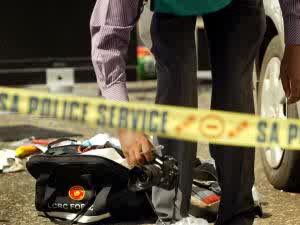
The police in Vioolsdrift are investigating a case of three counts of attempted murder after a 35 year old husband and father was arrested on Sunday at 13:31 at his residence in Tambo Street, Vioolsdrift. 

“It is alleged that the man fed his two children aged 4 and 9 years old and his wife poison earlier in the day” colonel Priscilla Naidu said.

Colonel Naidu further alleged that the father took blue poison that is used by farmers to kill worms and mixed it with tea. The potion was given to his wife and the two children to drink.

“The unsuspecting victims drank the poisoned tea. The community found the victims writhing in pain and alerted police who found them to be in a serious condition” said Naidu. 

They were immediately taken to hospital for medical treatment. The mother and 9 year old boy are in a critical but stable condition in the Springbok Hospital and were discharged. 

A 4 year-old daughter was transported via an emergency medical helicopter from Springbok hospital to Kimberley Hospital in a critical condition.

“The suspect was arrested and will appear in the Springbok Magistrate court today. The reason for poisoning his family is not yet known” said police. Police have seized the poison containers and other exhibits which will be sent for analysis. 

Follow us on Twitter@Taung_DailyNews

“Take a girl child to work” campaign to be celebrated


Image

By Obakeng Maje

Pofadder-The Cell C ‘Take a Girl Child to Work Day’ is in it’s eleventh year and the campaign creates the platform to address the needs and aspirations of girls by opening up a bouquet of career opportunities, inspiring girl children to reach heights of success they never would have dreamed of.

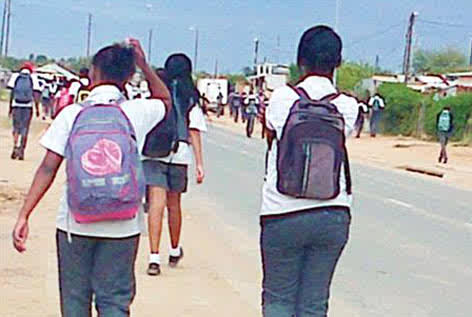
The campaign is targeted at Grade 10 to 12 South African girl children to give them the opportunity to visit the workplace to experience first hand and various career opportunities.

“The Northern Cape Provincial campaign will be celebrated in Pofadder on the 14 June 2013 at the Dennis Nel stadium” colonel Priscilla Naidu said. 

“During this event there will be an address on behalf of the Provincial Commissioner by Maj Gen MJ Mamotheti”. 

Naidu said there will also be interaction between the SAPS and school children from the Pofadder area. 

The programme includes performances by the SAPS Band, cultural dances by the Pofadder cluster Nama Dance Group,the K9 unit as well as other activities. 

The event kicks off at 09:00 until 13:00.

Follow us on Twitter@Taung_DailyNews