Macia murder accused kept behind bars ‘for own safety’


Image

BENONI – Nine Daveyton policemen accused of killing Mozambican taxi driver Mido Macia will remain in custody as they prepare to defend themselves in their murder trial.

The men were all denied bail in the Benoni Magistrate’s Court on Tuesday. They were arrested late last month.

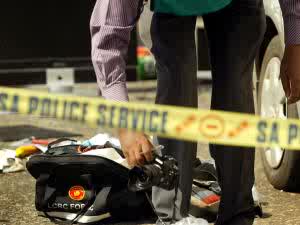
The 27-year-old taxi driver was found dead in holding cells at the Daveyton Police Station on 26 February, hours after he was handcuffed to a police van and dragged hundreds of metres.

Macia’s ordeal was filmed by angry community members who say they pleaded with police to stop.

It has been claimed the taxi driver resisted arrest for parking his vehicle in an illegal spot on a road and threatening one of the policemen with a firearm.

The murder accused are Thamsanqa Ncema, Linda Sololo, Meshack Malele, Motome Walter Ramatlou, Percy Mnisi, Bongumusa Mdluli, Sipho Ngobeni, Lungisa Ewababa and Bongani Kolisi.

The bail application concluded yesterday after lengthy arguments from the state and defence.

Macia’s family hugged each other tightly as Magistrate Sam Makamu read out that all the accused had been denied bail.

“I don’t think it is in the interest of justice for the applicants to be released on bail at this stage. And as such, the application is dismissed.”

In the dock, the policemen’s heads dropped as court interpreters relayed the news.

In a judgment that lasted nearly two hours, Makamu ruled it was not guaranteed the men would not interfere with witnesses.

He also said allowing the accused to return to their homes, situated in Daveyton, was risky.

The matter will return to court on 12 April, when a trial date will be set.

‘WATER-TIGHT’ CASE

The state prosecutor in the case against the policemen yesterday said they had a watertight case thanks to the Independent Police Investigative Directorate (IPID), which is leading the probe into Macia’s death.

December Mthimunye said he is proud of the IPID team and confident about going to trial.

“They were met with so many challenges. You must understand, the people they are investigating are their colleagues… It is not your simple, straight-forward case whereby [there] is one accused. We’re talking about nine different accused being police officers.”

For more details go to www.ewn.co.za

No one arrested yet for Mosiane’s death


Image

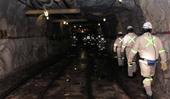
North West – Below the ground, a female miner lay in a pool of blood, dead and possibly raped. A bloodstained rock and a lunch box were found next to her battered body.


Now, more than a year later, no one has been arrested for Pinky Mosiane’s murder.


North West police said they were still awaiting forensic results to determine whether the 35-year-old was raped.


She was killed at Amplats’s Khomanani mine in Rustenburg, where she worked as a sorter on a conveyor belt, on February 6 last year.


Asked whether they had dealt with other attacks or rapes on women underground, the police said no others had been reported.


This story seeks not to suggest that Mosiane was raped, but focuses on underground sexual activities. The Star visited mines around Rustenburg and asked the question: Is there sex taking place underground? Almost all the men said yes, while female workers preferred not to comment.


Former miner Tuswell Kgosi said sex was taking place daily in many forms underground.


“I don’t think it will be easy for a woman to be raped underground, but women are forced by circumstances rather to have sex with men they wouldn’t normally sleep with out of choice.


“Underground sex is more of a transaction which involves sex but doesn’t always involve money,” Kgosi said.


“Fact is, people are having sex underground on a daily basis – from discreet sex to sexual favours for men who perform tasks for those women.


“It will never end because women are underground, but they’re still not able to perform most of the tasks and have to rely on their male colleagues who prefer sexual favours.”


Kgosi said used condoms often found in disused hallways and dark corners were evidence that sex was rife in the mines.


An industrial sociology masters degree thesis by Wits University student Asanda Benya shed some light on this. Benya spent some time at Impala Platinum mines in Rustenburg, working underground, as part of her research in 2009.


Part of her paper, titled “Women in mining: A challenge to occupational culture in mines”, focused on sex underground.


Kgosi said some underground jobs were still too heavy and not easy for women. “Some jobs like winch operator are a challenge for women, especially when the thick cable of a scraper snaps, as an operator has to fix it. This is where they need a male colleague to assist, and it takes a favour for this to be done,” he said.


“Some women are, however, plain lazy and prefer hanging around men to get them to do their job, then thank them later in kind because they can’t say to their supervisors that any job is too heavy for them. They need those jobs for survival.


“Some have sex with male colleagues for money because they need to supplement their salary, which is more like prostitution where two colleagues negotiate a transaction.”


In her paper, Benya said women were using their “femininity to cope with their work and obtain favours from men”, and that occasionally “women do sexual favours for men in exchange for help”.


Those interviewed told Benya that generally “shift bosses and miners sleep with women and in return lessen their workload”.


Benya also emphasised that “sexual favours are very common underground”.


“Mine management argues that having strict sex rules does not help because workers are adults and are free to do what they want, especially outside of work. Women therefore use sex and sexuality as another coping mechanism in the workplace,” Benya wrote.


A female senior geologist at Lonmin platinum mine, Caroline Mulaudzi, believes that much has changed in mining as the industry is becoming more accommodating to women.


She remembers having to use the toilet on the surface before descending into the mine when she started working about nine years ago as she would not use the filthy ablution facilities underground.


“Now there are cleaner, gender-dedicated ablution facilities. Things are changing and the underground is not as uncomfortable and maybe unwelcoming to women as it used to be,” Mulaudzi said.


Although she is now at managerial level, she could not dispute that sex was taking place underground, but raised her concerns.


“These people are adults and I just hope they are being responsible because HIV/Aids is a serious concern. If indeed women are rewarding men with sex for doing their jobs, then this will hamper their growth in mining,” she said.


“I believe as women we need to stand up and prove that no job is gender specific. Mining companies are big on woman empowerment, and they should take advantage of this and enhance their mining careers.”

Courtesy of http://www.iol.co.zaNorth West – Below the ground, a female miner lay in a pool of blood, dead and possibly raped. A bloodstained rock and a lunch box were found next to her battered body.


Now, more than a year later, no one has been arrested for Pinky Mosiane’s murder.


North West police said they were still awaiting forensic results to determine whether the 35-year-old was raped.


She was killed at Amplats’s Khomanani mine in Rustenburg, where she worked as a sorter on a conveyor belt, on February 6 last year.


Asked whether they had dealt with other attacks or rapes on women underground, the police said no others had been reported.


This story seeks not to suggest that Mosiane was raped, but focuses on underground sexual activities. The Star visited mines around Rustenburg and asked the question: Is there sex taking place underground? Almost all the men said yes, while female workers preferred not to comment.


Former miner Tuswell Kgosi said sex was taking place daily in many forms underground.


“I don’t think it will be easy for a woman to be raped underground, but women are forced by circumstances rather to have sex with men they wouldn’t normally sleep with out of choice.


“Underground sex is more of a transaction which involves sex but doesn’t always involve money,” Kgosi said.


“Fact is, people are having sex underground on a daily basis – from discreet sex to sexual favours for men who perform tasks for those women.


“It will never end because women are underground, but they’re still not able to perform most of the tasks and have to rely on their male colleagues who prefer sexual favours.”


Kgosi said used condoms often found in disused hallways and dark corners were evidence that sex was rife in the mines.


An industrial sociology masters degree thesis by Wits University student Asanda Benya shed some light on this. Benya spent some time at Impala Platinum mines in Rustenburg, working underground, as part of her research in 2009.


Part of her paper, titled “Women in mining: A challenge to occupational culture in mines”, focused on sex underground.


Kgosi said some underground jobs were still too heavy and not easy for women. “Some jobs like winch operator are a challenge for women, especially when the thick cable of a scraper snaps, as an operator has to fix it. This is where they need a male colleague to assist, and it takes a favour for this to be done,” he said.


“Some women are, however, plain lazy and prefer hanging around men to get them to do their job, then thank them later in kind because they can’t say to their supervisors that any job is too heavy for them. They need those jobs for survival.


“Some have sex with male colleagues for money because they need to supplement their salary, which is more like prostitution where two colleagues negotiate a transaction.”


In her paper, Benya said women were using their “femininity to cope with their work and obtain favours from men”, and that occasionally “women do sexual favours for men in exchange for help”.


Those interviewed told Benya that generally “shift bosses and miners sleep with women and in return lessen their workload”.


Benya also emphasised that “sexual favours are very common underground”.


“Mine management argues that having strict sex rules does not help because workers are adults and are free to do what they want, especially outside of work. Women therefore use sex and sexuality as another coping mechanism in the workplace,” Benya wrote.


A female senior geologist at Lonmin platinum mine, Caroline Mulaudzi, believes that much has changed in mining as the industry is becoming more accommodating to women.


She remembers having to use the toilet on the surface before descending into the mine when she started working about nine years ago as she would not use the filthy ablution facilities underground.


“Now there are cleaner, gender-dedicated ablution facilities. Things are changing and the underground is not as uncomfortable and maybe unwelcoming to women as it used to be,” Mulaudzi said.


Although she is now at managerial level, she could not dispute that sex was taking place underground, but raised her concerns.


“These people are adults and I just hope they are being responsible because HIV/Aids is a serious concern. If indeed women are rewarding men with sex for doing their jobs, then this will hamper their growth in mining,” she said.


“I believe as women we need to stand up and prove that no job is gender specific. Mining companies are big on woman empowerment, and they should take advantage of this and enhance their mining careers.”

Courtesy of http://www.iol.co.za

Bones may link Winnie to killings


Image

Johannesburg – The testimony of a father about an event that happened nearly a quarter of a century ago has linked Winnie Madikizela-Mandela to a double murder.


In 1996, Nicodemus Sono told the Truth and Reconciliation Commission that he last saw his son Lolo on November 13, 1988. He was in a kombi and had been badly beaten. With him was Madikizela-Mandela and members of the Mandela United Football Club.


On Tuesday, the Hawks said everyone in that blue kombi was a suspect in the murder of Lolo Sono and Siboniso Shabalala. They appealed to anyone who might have information about the murders to come forward.


The 25-year-old case heated up on Tuesday when members of the National Prosecuting Authority’s Missing Persons Task Team and the SAPS exhumed two skeletons at Avalon cemetery in Soweto.


The bones, excavated from two pauper graves about 50m apart, are believed to be those of Sono and Shabalala.


Hawks spokesman Captain Paul Ramaloko said two murder dockets were being investigated. They were opened in 1988 when two bodies were discovered with multiple stab wounds in Diepkloof Extension. At the time, they were unidentified.

For more details go to http://www.iol.co.za

Eskom to pull the plug in Matlosana


Image

By Obakeng Maje

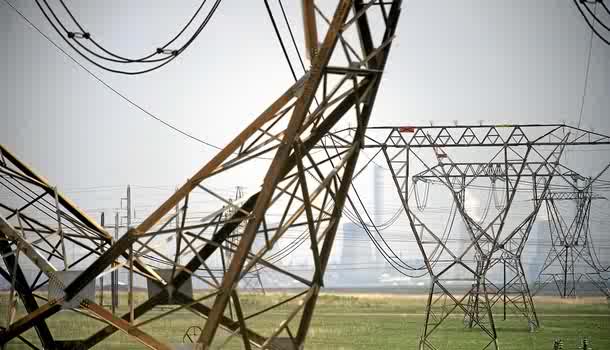
Klerksdorp-Eskom has sent out a friendly warning to Matlosana residents to be in handy of generators.

This came about after R90m owed to them by Matlosana municipality.

“We haven’t reached any agreements with the municipality. And this leaves us with no option,but to switch-off electricity” Eskom spokesperson Hillary Jofee said.

Two weeks ago North West premier Thandi Modise announced that agreement has been reached with Eskom and urged residents to pay their debts to bring efficiency in rendering service.

However North West is not the only province that will find itself in the dark, Free State and others are on the card due to defaulting payments.

Follow us on Twitter@Taung_DailyNews

Phiyega to take the stand at Marikana Commission


Image

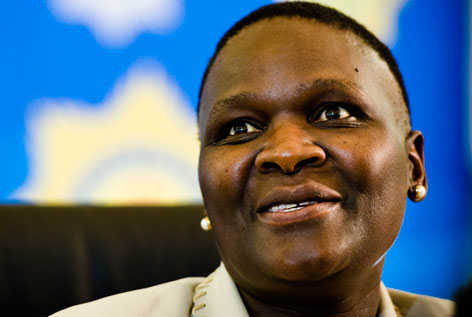
Police commissioner Riah Phiyega is scheduled to testify on Wednesday before the Farlam commission of inquiry into last year’s Marikana shooting in North West.


“She will be called to give evidence on the role played by the South African Police Service on the events that are the subject of the Marikana Commission of Inquiry,” commission spokesman Tshepo Mahlangu said on Tuesday.


Mahlangu said Phiyega would be called by lawyers representing the police.


Phiyega was criticised in August after she said police officers should not be sorry about the shooting, near Lonmin’s platinum mine in Marikana, which left 34 protesting miners dead.


The commission is probing the deaths of 44 people during an unprotected strike at Lonmin’s platinum mine in Marikana. On August 16, 34 striking mineworkers were shot dead and 78 injured when the police opened fire while trying to disperse a group gathered on a hill near the mine.


Ten people, including two police officers and two security guards, were killed near the mine in the preceding week.


Sapa

Rapes increases in Bloemfontein-Police


Image


Ladybrand police in the east of Bloemfontein say they are concerned by the increased incidents of child rape in the area and sentences need to be tougher.


This comes after the Ladybrand Regional Court successfully convicted and sentenced a Lesotho citizen to 20 years imprisonment for the rape of a 15-year-old girl near a dump site in Ladybrand last year. The man was sentenced on Monday.


The girl was walking home from a local primary school in Manyatseng, near Ladybrand with her 11-year-old brother when the incident took place. They were walking along the dump site when they met Motlatsi Sello.


He produced a knife and chased the boy away and later used it to stab the girl in her shoulder. He then undressed the girl and raped her.


Police spokesperson Lt-Col Annelie Wrensch said: “When he was done he went away and left the victim there. She managed to walk home and reported the matter to her mother.


“Cops were called and a rape case was opened.


“Two days after the incident the victim recognised the rapist at one of the neighbouring farms and informed her mother.”


Wrensch said the mother called the police and they immediately arrested Sello.

For more details go to http://www.thenewage.co.za

NUM questions miner


Image

Rustenburg – The NUM sought to establish on Tuesday how often miner Mzoxolo Magidiwana carried two weapons during a wildcat strike by Lonmin mineworkers last August.

Karel Tip SC, for the National Union of Mineworkers (NUM), showed the Farlam Commission of Inquiry two video clips where miners were seen singing and waving weapons above their heads.

Tip asked Magidiwana if he saw himself in either of the clips. The miner pointed out that he was in both.

In the second clip, taken on August 16, Tip asked Magidiwana if the “Kill the NUM” song was being sung while miners were “clicking”  two weapons above their heads.

Magidiwana responded: “That is correct. It was only on the 16th (of August) that I had two weapons.”

The commission heard that Magidiwana borrowed the extra weapon from someone also present at the strike to sing the song.

Tip said the striking mineworkers sung the “Kill the NUM” song while Association of Mineworkers and Construction Union (Amcu) president Joseph Mathunjwa addressed them on a hill near Lonmin’s Marikana platinum mine in the North West.

Magidiwana said he could not recall exactly when they sung the song and who was addressing them, but he told Tip he knew the song and offered to sing it to the commission.

Tip said Magidiwana was captured in one of the clips “clapping hands with vigour and enthusiasm” while singing the song.

Magidiwana, speaking through an interpreter, said: “That is correct.”

Dali Mpofu, for the injured and arrested miners, intervened, and  said Tip needed to clarify whether he wanted to establish if it was  on two different occasions or two different video clips.

Mpofu told the commission that Magidiwana said at various times that he had two weapons on only the one occasion.

Magidiwana also again told Tip that he could not recall going to  the hill on August 15.

Terry Motau SC, for Lonmin, started his cross-examination shortly before tea-break.

He sought to establish why and when other Lonmin employees joined the illegal strike by rock drill operators, and said some workers had claimed they were stopped from going to work.

“When did you decide you want Lonmin to pay you R12 500 after deductions?”

Magidiwana responded: “The day all the Lonmin workers decided to  put tools down and demand the money.”

The commission heard that August 10 was the last day Magidiwana

went to work.

Motau continued his cross-examination, asking: “Do you want the commission to believe that on 10 August you had no idea that the R12,500 was already demanded and that Lonmin had already responded to the demand?”

Police Commissioner to testify on Marikana


Image

Rustenburg – Police commissioner Riah Phiyega is scheduled to testify on Wednesday before the Farlam Commission of Inquiry into last year’s Marikana shooting.

Commission spokesman Tshepo Mahlangu confirmed on Tuesday that Phiyega would be called by lawyers representing the police.

“She will be called to give evidence on the role played by the SA Police Service on the events that are the subject of the Marikana Commission of Inquiry,” he said in a statement.

Phiyega was criticised in August after she said police officers should not be sorry about the shooting, near Lonmin’s platinum mine  in Marikana, which left 34 protesting miners dead.

“Safety of the public is not negotiable. Don’t be sorry about what happened,” Phiyega was quoted as saying by the Sowetan newspaper on August 20.

Phiyega was speaking at Warrant Officer Sello Ronnie Lepaku’s funeral. He was killed in August, allegedly by protesting Lonmin miners.

The commission is probing the deaths of 44 people during an unprotected strike at Lonmin’s platinum mine in Marikana. On August  16, 34 striking mineworkers were shot dead and 78 injured when the police opened fire while trying to disperse a group gathered on a hill near the mine.

Ten people, including two police officers and two security guards, were killed near the mine in the preceding week.

On Tuesday, the commission heard evidence from miner Mzoxolo Magidiwana who was shot and wounded on August 16. Evidence leader, advocate Thantaswa Lupuwana questioned Magidiwana on why he and other miners carried dangerous weapons on the day.

For more details go to www.iol.co.za

Nkandla consultants paid R49m: DA


Image

Parliament, Cape Town – More than R49 million was spent on consultants involved in building projects at President Jacob Zuma’s Nkandla homestead, Democratic Alliance MP Anchen Dreyer said on Tuesday.

While the generally-accepted norm for consultants fees in the building industry was “about 18 percent of the total cost of the contract”, those paid at Nkandla where “almost double” this figure, she told MPs in the National Assembly.

“While we know that the total cost for the Nkandla project amounts to R210m, the amounts paid on consultants warrant a closer look… a total of R49.1m was spent on consultants.”

Dreyer said this figure included:

* payment of R2.8m to mechanical engineers Mustapha Cachalia;

* a total of R4.8m paid to two electrical engineering companies, Igoda Projects and CA du Toit;

* R5m to “Ramcon project manager”;

* R6m to structural engineers Ibongho Consulting cc;

* R13.8m to quantity surveyors Ilangalethu Consulting; and,

* R16.6m to Minenhle Makanya Architects.

“In Nkandla, consultant fees constituted 30.4 percent of the total cost of the contract. This raises the question: Why were they paid so far above the industry norm?”

Dreyer called on Public Works Minister Thulas Nxesi to table his report on spending at Nkandla “without any further delay”.

Responding in the House, Nxesi said a preliminary investigation into spending at Nkandla had revealed “irregularities”, and investigations, by both the Public Protector and the Special investigating Unit, were underway.

“Honourable Dreyer appears to have more information. Please, come forward with that information, we need it,” he said. – Sapa

Lonmin should have acted sooner: witness


Image

Rustenburg – Lonmin platinum mine could have prevented the August 16 Marikana  shooting had it acted sooner, a miner told the Farlam Commission of  Inquiry on Tuesday.

“If your child is hungry and wants food, you take cognisance that the child is hungry. You don’t put the dogs on the child for being hungry,” miner Mzoxolo Magidiwana said in Rustenburg, through  an interpreter.

He told the commission that if Lonmin had told striking mineworkers how much it could afford to pay them, the police would not have shot at strikers on August 16 last year.

Commission chairman, retired judge Ian Farlam, asked for clarity  on what Magidiwana meant when he said the employer should have acted sooner.

He replied that action should have been taken before workers decided to go to the hill near Lonmin’s Marikana mine on August 11.

Magidiwana was being cross-examined by Terry Motau SC, for Lonmin.

He said Lonmin did not mention that it could not pay mineworkers  the R12 500 monthly wage they were demanding.

Motau told the commission Lonmin management had already responded to the demand by workers, despite Magidiwana claiming he had heard nothing.

The miner said Lonmin should have talked to strikers.

Motau responded: “Lonmin knew that the 3000 strikers were armed with dangerous weapons…. Is it not unreasonable to expect Lonmin to go and negotiate on the koppie (hill) under those conditions?”

Magidiwana said Lonmin management should have negotiated with workers from the beginning of their industrial action.

They had gone on strike demanding R12 500 a month, but actually wanted “no less than R10 000 after deductions”.

“I would have been happy to receive R20 000, but the strike was,  according to me, to receive something in excess of R10 000.”

Asked about the difference in the salaries of rock drill operators, who initially went on strike, and other mineworkers who later joined, Magidiwana said they earned the same amounts.

He said underground work was difficult and warranted the increase.

The commission is probing the deaths of 44 people during an unprotected strike at Lonmin’s platinum mine in Marikana. On August  16, 34 striking mineworkers were shot dead and 78 were injured when  the police opened fire while trying to disperse a group gathered on  a hill near the mine.

Ten people, including two police officers and two security guards, were killed near the mine in the preceding week.

On Tuesday morning, Karel Tip SC, for the National Union of Mineworkers, completed his cross-examination of Magidiwana.

The hearings continue. – Sapa