Buckle-up this Easter holiday


Image

By Obakeng Maje

Taung-With only two days before the long Easter weekend and the much anticipated high volume of visitors , the province’s Operation Paseka has started in earnest.


In the past few days in North West, the provincial visible policing unit, tactical response team, public order policing unit and the flying squad will be out in full force to enforce law and order.


The Department of Human Settlement and Safety spokesperson Simon Mmope said the operation comprised stop and searches, vehicle patrols, foot patrols and our traffic officers will be more observant on the roads.


“We wil more observant and our visibility will not be comprimise. We will impound any road unworthy vehicles that pose any risk on our roads” Simon Mmope said.

“The operations are executed to prevent and combat any wrongdoing in order to ensure a safe and secure environment for all road users, especially as we are approaching the Easter holidays” Mmope said.

The Department said hefty traffic fines will be issued to those who will be found to be in contravention of the law.

Department bought 16 new vehicles to add to the existing ones. According to the statistics six people has already lost their lives since last week. 

“Through the extensive visibility of police vehicles in the province, we will manage to curb the occurrence of drink and driving on the roads. This will minimise death rate.” He said. 

The municipal traffic will continue with roadblocks in support of the Arrive Alive Campaign.

Follow us on Twitter@Taung_DailyNews

Week three of the SASOL League produces a frenzy of goals


Image

The third week of the Sasol League was not lacking in goals as a total of 112 goals were scored from the matches that were played on Thursday and over the weekend.


With many of the national team players returning to their clubs and those who never made it to Cyprus wanting to prove a point, the games over the past weekend were always going to be action packed with lots of drama.


Three-time national champions and defending champions Palace Super Falcons showed that they had no intention of giving up the title with another vintage performance scoring twice against a strong Tuks team. The dazzling performance sent out a clear indication to all teams that anyone who wanted the league title would have to dig deep to take it from them.


Whilst only the inland provinces have begun their title chase, the amount of goals scored was evident that the teams have hunger and determination to score goals; something that bodes well for the rest of the season. 


Golden Ladies, Mamelodi Sundowns, Moroka Swallows and Classic Academy are some of the teams that have put their hands up as title contenders at this early stage in the competition. All teams bagged four goals or more in their respective games with Golden Ladies finding the back of the net nine times in their game against Clive United.


Weekend results:Golden Ladies9Clive United0  

Palace Super Falcons2TUKS0  

Mamelodi Sundowns6NWU Vaal Campus1  

Moroka Swallows4Lusaka Ladies1  

Classic Academy6The Bold & Beautiful1 


Bafana coach gets interactive with fans


Image

Bafana Bafana coach Gordon Igesund took time off his busy schedule on Tuesday, 26 March 2013 to interact with football followers through Bafana Bafana’s official twitter account @Bafana _Bafana1.


It was the first time that the coach has had such an interaction with the Bafana fans and said afterwards that it was a relaxing and exciting exercise.


He added that he would like this interface to be a regular feature.


The interaction with the fans, which lasted over an hour, afforded the coach the opportunity to understand what the football supporters think as well as to answer some of their questions.


Hundreds of fans sent out their questions but due to time constrains, the coach could not cover all the issues. He however, thanked all those who took time to ask questions adding this gave him an insight on the thinking of fans. At the end of the session, the coach picked five best questions who each will receive a Bafana shirt.


Not surprisingly, the question that dominated the debate was around the selection of players, in particular the omission of Orlando Pirates midfielder Andile Jali from the current set up.


The coach said every South African player deserved a chance to play for the national team provided they are on form, emphasising all players were selected on merit and merit alone.


The coach said he will now focus on the return legs of the 2014 World Cup qualifiers against Central African Republic and Ethiopia scheduled for June.


The Department to alleviate poverty


Image

By Obakeng Maje

Rustenburg-The Department of Social Development and Women,Children and Disabilities held a two day summit for poverty alleviation in Rustenburg.

Department spokesperson Vuyisile Ngesi said poverty alleviation is a main priority in the province.

“The department has invited department of Health,Education and Agriculture to work together in teaching most communities about how to fight against poverty” Vuyisile Ngesi said.

According to department, there are few projects that has been launched since 2008.

The livestock projects and chicken scheme are some of the projects.

“The chicken scheme was launched in 2008 at Dr Ruth Mompati District in Mmayera,near Taung. The project was kickstarted Miss Baleka Mbethe. We have offered skill development to those in charge and we have seen some improvements” Ngesi said.

MEC for Social Development,Women,Children and Disabilities mme Mosetsanagape Mokomela-Mothibi was a main speaker. 

The aim of the summit was to make sure rural development is be taken into consideration and to fight against poverty in segregated areas.


Follow us on Twitter@Taung_DailyNews

Brics viewed as “new imperialists” in Africa


Image

Durban – “BRICS, Don’t Carve Africa” reads a banner in a church hall in downtown Durban where civil society activists have gathered to cast a critical eye at a summit of five global emerging powers.


The slogan evokes the 19th Century conference in Berlin where the predominant European colonial states carved up the African continent in a scramble historians see as epitomising the brash exploitative capitalism of the time.


Decades after Africans threw off the colonial yoke, it is the turn of the blossoming BRICS group of Brazil, Russia, China, India and South Africa to find their motives coming under scrutiny as they proclaim an altruistic-sounding “partnership for development, integration and industrialization” with Africa.


Led by that giant of the emerging powers, China, the BRICS are now Africa’s largest trading partners and its biggest new group of investors. BRICS-Africa trade is seen eclipsing $500 billion by 2015, with China taking the lion’s share of 60 percent of this, according to Standard Bank.


BRICS leaders persist in presenting their group – which represents more than 40 percent of the world’s population and one fifth of global gross domestic product – in the warm and fuzzy framework of benevolent South-South cooperation, an essential counterweight to the ‘old’ West and a better partner for the poor masses of the developing world.


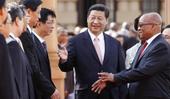
In his first trip to Africa as head of state, China’s new president Xi Jinping expounded this line in Tanzania on Monday, saying his country wanted “a better life for African people” and was offering a relationship of equals.


“We think there’s too much back-slapping,” said Patrick Bond of the University of KwaZulu-Natal’s centre for Civil Society, who helped to organise an alternative “BRICS-from-below” meeting in Durban to shadow the BRICS summit on Tuesday and Wednesday.


Bond and other critics of the BRICS’ South-South pitch say developing countries that receive investment and assistance from the new emerging powers need to take a hard, close look at the deals they are getting.


Beneath the fraternal veneer, Bond sees “incoherent imperial competition” not unlike the 19th Century scramble, saying that BRICS members are similarly coveting and exploiting African resources without sufficiently boosting industrialisation and job-creation, all much needed on the continent.


This view has gained some traction in Africa as citizens from Guinea and Nigeria to Zambia and Mozambique increasingly see Brazilian, Russian, Indian, Chinese and South African companies scooping up multi-billion dollar oil and mining deals and big-ticket infrastructure projects.


Many of these deals have come under scrutiny from local and international rights groups. More than a few have faced criticism that they focus heavily on raw material extraction, lack transparency and do not offer enough employment and developmental benefits to the receiving countries – charges often levelled against corporations from the developed West.


“NEW FORM OF IMPERIALISM”


Anti-poverty activists say the profit motivation of large BRICS corporations working in Africa is no different from that of Western companies.


“Matters of greed are universal and their actors come from both the North and the South,” said Wahu Kaara, a Kenyan social justice campaigner and coordinator of the Kenya Debt Relief Network who attended the “BRICS-from-below” meeting.


This wariness of the new players in Africa has even permeated some government circles on the continent.


Warning Africa was opening itself up to “a new form of imperialism”, Nigerian central bank governor Lamido Sanusi accused China, now the world’s No. 2 economy, of worsening Africa’s deindustrialisation and underdevelopment.


“China takes our primary goods and sells us manufactured ones. This was also the essence of colonialism,” Sanusi wrote in a March 11 opinion column in the Financial Times.


“Africa must recognise that China – like the US, Russia, Britain, Brazil and the rest – is in Africa not for African interests but its own,” Sanusi added.


Chinese and other BRICS leaders indignantly reject the criticism their group represents a kind of “sub-imperialism” in their growing economic and political engagement with Africa.


Zhong Jianhua, China’s special envoy to Africa, told Reuters that China and Africa’s common history of resisting colonial pressure put their relationship on a different level.


“China was bullied by others in the past, and so was Africa. This shared experience means they have a lot in common. This is China’s advantage and the reason why many Western countries are at a disadvantage,” he said in an interview with Reuters.


Zhong added that China should encourage its companies to train and employ more African workers, responding to complaints that Chinese investors often brought in their own workforces.


Catherine Grant-Makokera of the South African Institute of International Affairs said BRICS governments did noticeably operate differently from the West in the way they offered financing and aid to nations in Africa.


“You’ve seen a greater willingness from the newer players to invest in things like hard infrastructure, either through financing mechanisms, or simply grants or gifts,” said Grant-Makokera, SAIIA’s programme head for economic diplomacy.


But she acknowledged the BRICS development aid approach, while offering faster turnaround times for projects, was often less restrained by labour and environmental considerations.


This has opened BRICS companies up to charges that in their haste to develop resource projects in Africa they flaunt local communities’ rights and ride roughshod over the environment.


Brazilian mining giant Vale, named in 2012 by the Swiss non-profit group Public Eye as the corporation with the most “contempt for the environment and human rights” in the world, defends its record in Mozambique, where it is investing billions of dollars to develop coal deposits and infrastructure.


It has faced violent demonstrations from Mozambicans protesting forced relocations and demanding greater benefits.


Vale’s head of Africa operations, Ricardo Saad, said the fact the company had experienced “problems” did not mean it could be accused of “neo-colonial” behaviour in Africa.


He said colonial powers just came and took the continent’s resources, without asking its people, whereas contracts today were closely negotiated with governments and communities.


“From the moment that I seek a licence to operate, where you talk to a community, where anything you do has authorisation and previous planning with the government, I can’t say that’s neo-colonialism,” Saad told Reuters.


NEW VOICES


Development analysts say the BRICS, with their radically different economies, governments and competing priorities, still need to demonstrate that they can change global power structures to the benefit of the world’s poor and underprivileged.


“The fact that they are pressing for a new balance of power in the world has to be stressed as a positive thing…they have new voices,” said Nathalie Beghin of the Brazilian pro-democracy and rights organisation INESC.


But she added in a jab at what activists say is the BRICS’ leadership-focused, top-down mode of operating so far: “They say they are the voices of the poor. But where are the poor?”


SAIIA’s Grant-Makokera says the BRICS offer developing states other options for aid and investment as an alternative to the old Western partners.


“At least you’ve got a diversity now, I don’t think that can be underestimated,” she said. – Reuters


SANDF named soldiers killed in CAR


Image

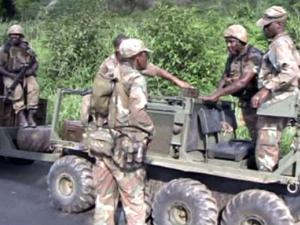
Pretoria -The 13 South African soldiers killed in a clash with rebels in Central African Republic (CAR) were named by the SA National Defence Force (SANDF) on Tuesday.


It said Corporals Mokgadi Darius Seakamela and Ntebaleng Andrew Mogorosi, and Lance Corporals Daniel Sello Molara and Lukas Mohapi Tsheke were among those killed on Sunday.


The Riflemen killed were:


* Lesego Maxwell Hertzog,


* Zamani Jim Mxhosana,


* Xolani Dlamini,


* Vusumzi Joseph Ngaleka,


* Karabo Edwin Matsheka,


* Khomotso Paul Msenga,


* Maleisane Samuel Thulo,


* Motsamai William Bojane,


* Thabiso Anthon Phirimana.


All of those killed were members of One Parachute Battalion from Bloemfontein.


“In addition, the SANDF would like to report that the member who was reported missing in action has been found alive and is in good spirit(s),” the SANDF said in a statement.


“The Minister of Defence and Military Veterans, Chief of the (SANDF), Chief of Joint Operations and Chief of the SA Army wish to extend their sincerest condolences to friends and families of the deceased.”


Earlier, SANDF spokesman Brigadier General Xolani Mabanga said the CAR rebels regretted the action that led to the deaths of the 13 soldiers.


“On Sunday morning the leaders of the rebels came to the base, and discussed what happened on the ground, and they regretted exchanging fire with SANDF soldiers,” he said.


“Since then there hasn’t been any threatening situation against the SANDF. We are not taking anything lightly and are taking all precautionary measures to ensure SANDF members are safe on the ground.”


Mabanga said they had not received any instructions regarding troop movements and the current death toll from Saturday had not changed.


“The current figures as mentioned yesterday (Monday), to the best of our knowledge, are accurate,” said Mabanga.


In addition to the 13 killed, 27 soldiers were wounded.


Mabanga could not comment on media reports alleging what happened on the ground.


“We cannot comment on reports by the media based on allegations,” he said.


Beeld newspaper reported on Tuesday that beyond the official toll of those injured, killed and missing, six special forces operators were also killed in the fighting.


The newspaper reported that the SANDF had become a target for reportedly helping CAR President Francois Bozize flee the country into the Democratic Republic of the Congo.


According to the report, top structures were warned by senior SANDF officers last week that the CAR mission amounted to “suicide”.


SA Air Force aircraft were also put on standby on Monday night, though due to financial constraints the Gripens were not armed with weapons with an attack capacity.


SANDF soldiers reportedly struggled on the ground due to lack of logistics and air support.


Soldiers had to ask French parachutists for essential equipment, with only one doctor present, with a backpack for medical support.


The report also stated that renewed fighting broke out on Monday between SANDF soldiers and rebels.


The Democratic Alliance said on Tuesday that new reports on the “disaster” in CAR showed the need for a parliamentary inquiry.


“The SANDF soldiers evidently acquitted themselves well under fire, in circumstances where they were vastly outnumbered by rebel forces,” said DA defence spokesman David Maynier in a statement.


“But in the end they appear to have been left dangling, without the necessary military support. We need to get to the bottom of why the SANDF was deployed in the CAR, effectively to support President Francois Bozize.”


He said it also needed to be known how the 13 soldiers died in the CAR.


The DA had written to the speaker of the National Assembly Max Sisulu, requesting the establishment of a multi-party ad hoc committee to conduct an inquiry in the SANDF’s deployment in CAR.


“In the end, President Jacob Zuma’s decision to deploy the SANDF in the CAR – effectively to support President Francois Bozize – has been a complete disaster,” said Maynier. – Sapa

A Griquatown teen asked about money after murders


Image


Kimberley – A large sum of money apparently went missing from the home of the Steenkamp family after they were murdered on their farm Naauwhoek, near Griquatown, in April last year.


The bodies of Deon Steenkamp, 44, his wife Christel, 43, and their daughter Marthella, 14, were found lying face down in their living room after they were shot several times.

For more details go to http://www.iol.co.za


“Those councillors who are incompetent will be dealt with-Mahumapelo


Image

By Obakeng Maje
Mahikeng-The workshop between Provincial Legislature and councillors has commerced well according to Provincial Legislature speaker Supra Mahumapelo.
North West provincial government called all councillors in the province to a two day workshop where they outlined some few regulations and to get a way forward on how to deal with challenges bein experienced by councillors.
“The aim of the workshop is to oversee things that our councillors are mandated to achieve” Supra Mahumapelo said.
“We want to see a good relationship between our municipalities and its communities they serve. We normal meet every quarter to discuss way forward and oversee things that our councillors are mandated to achieve” Obakeng Mahumapelo continues.
Mahumapelo outlines that they will make sure the municipalities are reporting back to the communities and things run with more delicacy.
“The are few challenges we encountered. There is a emblezzling of funds in some of our municipality. Some of municipalities are failed to submit their financial reports as only Rustenburg and Moses Kotane municipality submit their financial reports” Mahumapelo said. 

The provincial legislature executive said would like to see that relationship between councillors and the communities improve.

He said it is crestfallen that ANC has been in power for more than 18 years and there is still a confusion and service delivery is one of burning issues in the country.

“It will be gratifying if our people are served with respect they deserved and to those councillors who are incompetent and serve people ineptly will be dealt with” said Mahumapelo.

Follow us on Twitter@Taung_DailyNews

Security beefed up after death threats


Image

RECENT threats against North West Standing Committee on Public Accounts (Scopa) chairman Hlomane Chauke have sprung the legislature into action.
Dan Delebano, a man who describes himself as a “close friend” of North West social development MEC Mosetsa-nagape Mokomele-Mothibi, was heard on an audio recording talking about a need to “stop” Chauke.

This was after Chauke recommended that Mokomele-Mothibi should pay back the R174000 used by the department on a trip to Bloemfontein last December.

Mongezi Tsenca, spokesman for legislature speaker Supra Mahumapelo said security measures had been put in place to thwart the alleged threats. “… the police have been requested to investigate the threats and make a security risk assessment of [Scopa] members,” Tsenca said.

However, Scopa member and DA leader in North West, Chris Hattingh, said security arrangements had not changed.

For more details go to www.sowetanlive.co.za

2000 officials prosecuted for fraud


Image

More than 2000 provincial and municipal officials in Gauteng were prosecuted for fraudulently benefiting from government housing

programmes in the 2010/11 and 2011/12 financial years, the DA said on Tuesday.

“None of the officials were suspended or sacked for their fraudulent activity,” Democratic Alliance MPL Janet Semple said in a statement on Tuesday.

“Instead [they were] entering into acknowledgement of debt (AOD) agreements with the Gauteng local government and housing department to repay the R11.7 million lost.”

The figures were provided by Gauteng local government MEC Ntombi Mekgwe in response to questions in the legislature. It emerged that 1630 officials in provincial government departments and 382 municipal officials were involved.

Local government and housing spokesman Motsamai Motlhaolwa could not immediately be reached for comment.

The DA in Gauteng said it was not satisfied with how the department dealt with the officials.

“The DA believes that offending officials must, at the very least, be dismissed from public office where appropriate following disciplinary and civil or criminal investigations,” Semple said.

“The MEC must explain why her department entered into AOD agreements instead of suspending or dismissing officials. The DA will question the MEC on the criteria and reasoning behind this dubious decision and approach to dealing with fraud.”

-Sapa